Thursday, July 28, 2011

It is the Powershot time of the year again!

After almost a year since my last post, I have decided it is time to hit my keyboard again....

It is almost August and in mid-August, Canon usually updates the Powershot G series as well as the its young sibling, the compact S-series.

So, it is speculation time again... What would Canon likely do to improve the already impressive range of cameras. A short scan of Sony and Panasonic sensor announcements in the past year did not yield anything revolutionary nor interesting. There is the new 12mpx 1/2.3" CMOS BSI sensor from Sony (IMX078CQK) which I believe has found its way into most of Canon's recent PnS cameras, but nothing much more. The fact that Canon uses mostly Sony sensors for its PnS, I think we won't be expecting anything exciting in the sensor department anytime soon.

Here are some potential sensor scenarios for the G13 and the S100 (? if Canon doesn't mind reusing an old model number).

  1. A new Canon manufactured sensor. This would likely be a larger sensor, maybe the often rumors 2.7x crop sensor or even m4/3 sized one. However, this would create a huge challenge in making the new PnS pocketable. Remember, the physics cannot lie, bigger sensor, bigger lenses, bigger cameras.
  2. Reusing the same 10mpx 1/1.7" CCD sensor which is pretty good and perhaps improving the NR algorithm but yawnnn...
  3. Using the same IMX078CQK sensor as the other IXUS and PnS offerings. The smaller sensor would allow Canon to increase the zoom range for the G and S series without increasing size. The picture quality seems to be on par with some of the bigger CCD sensors as well. You also gain high speed shooting and 10180p video recording.
From these three scenarios, I somehow feel the chances of (3) happening is pretty high, given its ability to allow much needed features to be added in order to catch up with the competitions. The shrinking down in the size of ILC (the cameras formerly known as EVIL) will definitely pressure Canon to redesign the G series, perhaps more than the S series.

What are some of the these features that Canon would likely be (pressured?) to add to the new compacts. Here is a list:

  • 1080p video recording - Almost a must. I mean come on, my phone can do it...
  • Higher frame rate shooting - Maybe 5 fps?
  • More filter effects, better and faster HDR, simulated bokeh, etc...
  • Better high ISO noise control
  • Faster AF
  • Smaller Size
  • Better lens - High Resolution, Bigger Zoom (24-200mm for G Series, 24-120mm or 24-140mm for S series), Faster (f2.0/f1..8)
  • Panorama Stitch
  • Electronic Leveling
  • Flash Commander Mode
Ofcourse, traditional features such as RAW capture and OVF (for G Series ) would likely stay. As you would probably have notice, many of these features, would only be possible with a smaller BSI sensor at 1/2.3".... Thus, this year, my head would be in control rather than my heart. As much as I want a bigger sensor compact, my prediction stays with a smaller BSI sensor, bringing with it size and a more versatile lens advantage....

Wednesday, October 20, 2010

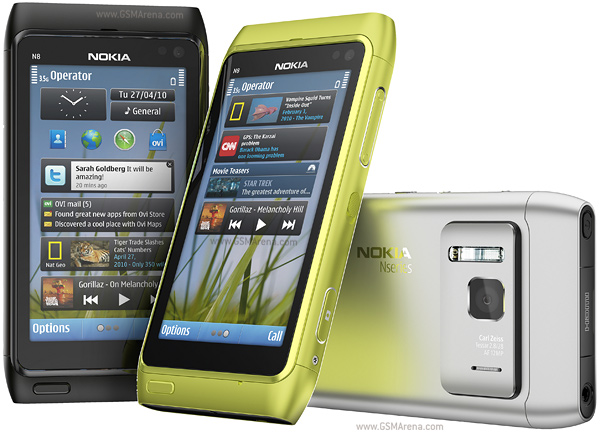
A Short Review on the Nokia N8


I have managed to try this phone several times at the Nokia showroom. You can probably find lots of camera samples and image quality comparisons. I will not talk about those things here. Here are my opinions from the usability perspective.

The general GUI and performance of the phone seems acceptable. scrolling is smooth and responsive and the pages follow my finger pretty closely as I swipe it across the screen. I would say at a glance, the performance is almost comparable to Android and iOS.

The main draw of this camera is supposed to be the 1/1.83" 12 mpx sensor which rivals the advanced compact cameras such as G12, LX5, EX1 and the S95.

However, I find the camera interface to be a huge disappointment.

- The amount of control on ISO is limited. You can select a range: high, medium, low but you are not able to select the exact ISO value. For a phone touted to have an large-advanced sensor I find it surprising that Nokia would limit the ability to set ISO. My opinion is that people who does not know about ISO would not even bother to set the range of the ISO. On the other hand, those who bothers to set ISO would probably like to be able to set the actual ISO value, not just a cryptic range. Now Nokia really baffles me here.

- There is no display of shutter speed. Every shot I took was a gamble. I could only hope that the phone would get it right and there were no camera shake.

- There is no option to change the metering mode. Even my 2 year old Sony Ericsson C901 supports 'spot metering'.

- There is no ability to zoom into an image immediately after a shot is taken. Most photographers shooting with digital cameras have the habit of immediately zooming into an image to check for motion blur or sharpness. After a shot is taken, the N8 preview does not allow you to do much. You will have to select 'edit', wait some time for the image to load and then be able to zoom. This is a major irritant to me. To get back to shooting mode, you have to exit the edit mode and select 'back' again to return to the camera.

- The focus area is really huge. This limits the ability to focus on smaller objects.

- The camera menu is not well thought of. Instead of the usual important settings such as ISO, Macro, Metering mode, EV compensation, there is only a flash button on the main page. If you access the settings menu, you are presented with a bunch of less important settings like the sharpness, the contrast, etc... Perhaps the designer of N8 should buy him/herself a proper PnS camera to see how to design a camera interface.

To conclude, I find the N8 to be a camera phone with all the right hardware but the wrong firmware. The picture quality is good and Nokia has to realize that the camera is the main selling point of this phone. With such a great sensor and lens, this should have been a home run for them. I cannot believe they screwed up the most important part of the phone, the GUI of the camera.
It is like giving you a car with the most sophisticated turbocharged engine but it comes only with the steering wheel and accelerator, without any mechanism for gear change or gauges to display engine parameters.

Hopefully there will be a software update or a 3rd party camera app which provides a better camera GUI.

Sunday, August 22, 2010

The G12, again...

There has been a leak on the new G12, surprisingly from Cnet Asia this time. Numerous sites have posted the leak, so I will not repeat it here. In summary,

- There will not be a new sensor, it is likely to use the same sensor as the S95, i.e. pretty much the same as the current G11
- A couple of new features here and there include HDR and HD movie (720p) and multi aspect shooting
- The most significant cosmetic change is a new dial, similar to Canon dSLR in front of the shutter button

Now, here is something I learnt from all this. Canon do not make their own PnS sensors and from the looks of it, they do not plan to do so. Therefore, any sensor they use in their cameras are off-the-shelf parts from the likes of Sony.

Sony hasn't announced any new sensors since the BSI-CMOS one which is used in the Ixus series, including the recent Ixus 1000. It does make sense for Canon to reuse the sensor in G11 or the BSI-CMOS one. Like I said in the previous post, it would be really funny if Canon decide to use a smaller sensor in the G series than the one used in the Nokia N8 smart phone :)

For the upcoming G12, I only hope for the following:

- New Digic and circuitry to improve noise processing
- More NR options
- Improve on details by tweaking lens and perhaps AA filter. The G11 lost out to the LX3 on details.
- Faster shot to shot speed
- Faster AF speed and accuracy
- Reduce clipping
- Support longer exposure (30sec) in Av mode
- Support remote trigger
- Graduated ND on top of built in ND

So there you go, there is still hope that the G12 can be a significant improvement to the G11...

Sunday, August 15, 2010

Speculating the Canon G12 CMOS Sensor


It turns out, my hunch was rather accurate. Canonrumors reported the rumor a few days ago, giving the G12 the following specs:

- CMOS Sensor (10mpx BSI?)
- HD Video (1080p?)

... and ofcourse the S95 will follow suit with a similar spec.

Looking at the specs, I cannot help but speculate at what could be Canon's strategy in the new G12...

Traditionally, Canon do not create custom sensors for their PnS range like they do for their dSLRs, though I really hope this will change. If it is indeed a 10mpx CMOS sensor, then this should be the same one from Sony used in the IXUS 300HS/SD4000. This IMX050CQK is a 1/2.3" sensor which seems to have roughly the same high ISO performance as the 1/1.7" CCD from S90/G11.

The only added advantage is that it supports HD Video and faster fps in still mode, due to the faster CMOS readout speed, while consuming less power at that. Since this is a smaller sensor, Canon could create a faster lens at the same size or reduce the overall size of the G series camera. Strangely, despite being used by numerous manufacturers, the performance of this sensor varies across all the different models. It could be that the true potential of this sensor has not been released and it has more to offer.

Let us now explore two possible scenarios.

Scenario A - Canon uses the same Sony sensor as the IXUS 300HS , the benefits of using the IMX050CQK 10mpx 1/2.3" sensor are:

- True HD Video (1080p)
- Faster FPS
- Longer Battery Life
- Faster Lens (maybe f2.0)
- Longer zoom is possible
- Wider angle is possible
- Reduce overall size

However, being a smaller sensor, lens sharpness, bokeh, and other qualities may suffer.

Scenario B - Should Canon use a brand new CMOS sensor at 1/1.7" or bigger, things could get even more exciting. Here are the benefits:

- True HD Video
- Faster FPS
- Longer Battery Life
- Better Bokeh, than 1/2.3"
- Even Better High ISO Performance (potentially)

Decisions decisions decisions... Someone once said 'Engineering is all about making the right compromise'

One interesting thing to note is that if the G12 does indeed have a 1/2.3" sensor, it would have a smaller sensor than the Nokia N8 smart Phone!

Sunday, August 8, 2010

No Rumors, Just a Hunch...


In the past two years, Canon has been announcing the new G series right about this time. The G10 was announced in Aug 2008 while the G11 was announced in Aug 2009. Will we see an announcement in Aug 2010? There is after all, already news of some new Powershots to be announced on 26th Aug... Could it be?

Canonrumors reported that the S90, which was announced together with the G11 on Aug 2009 was already retired...

Will my dream G12 be announced in a couple of week's time?

Saturday, July 17, 2010

Leaked Specs for LX5


It has been long overdue but finally, it seems like the LX5's long awaited debut is imminent. Several sites have posted leaks of the specs for LX5. Here they are:

- 10.1 mpx CCD Sensor (supporting 3:2 and 16:9 at 9.5mpx)
- AVHCD lite video 720p (30fps sensor, 60fps max)
- 3.8x zoom 24-90mm
- Optional Optical and EVF

Looking at the specs, it seems like there has not been any earth shattering advances in terms of features...

The increase in zoom range is definitely a plus and the video seems better. As of now, the 5x zoom and OVF of the G11 is still hard to beat and it seems like there will not be a clear winner yet. If high ISO performance and DRange have improved leaps and bounds, that could swing things its way though. I can't wait for some reviews to come soon...

Wednesday, June 30, 2010

If I were to design the G12, how would it look like?


As a consumer, I would probably be the best designer of Canon's next gen G series compact. Definitely a lot better than a geeky, excitable engineer in a lab. If I were asked to design the G12, I would most definitely include the following:

  • A larger sensor, maybe a 2x crop of even a 2.7x crop sensor (1"). Most probably CMOS. At this size, Canon can afford to incorporate some clever tricks in the CMOS sensor.
  • To cater to the larger sensor size, I have designed the lens to be about 30% larger
  • With the larger lens, I would not include the optical viewfinder which is useful but not really accurate. I would invest in a more efficient battery instead. With a better batt capacity, the need for an OVF would not be as pressing.
  • I would remove the dedicated dial for Exposure Compensation. Even in dSLR, this is often controlled via the common dial and perhaps activated by a single button on the back of the camera.
  • Popup flash, to cater to the bigger lens, there would not be any real estate left for a flash. The space vacated by the Exposure Compensation can be used for this purpose. Something around 6GN(ISO 100) would be more than useful.
  • Faster Image Processor and AF performance. I would target something like 3fps with shot to shot time of about 1 sec or faster. Af performance need to be about 0.3s-0.4s
  • AF assist lamp. For CDAF focusing system, the Af assist lamp is extremely essential.
  • Maintaining 5X magnification Lens from 28mm-140mm and f2.8-4.5 would be beyond usefulness and is almost critical in making this product a success.
  • Adapter thread for Wide Angle and Tele converters. I believe a good Wide/Tele converter means that there is no need to change lens. Why would anyone change lens if this camera can cover 24mm-200mm (35mm equiv) and supports Macro. If anyone needs anything more, she should get a dSLR and not complain about weight.